Fixed refrigerator shelves place elevated and rear storage beyond a comfortable seated reach, creating a practical accessibility barrier.
Mechanical DesignProduct DevelopmentAssistive Technology
Project 04 / Two-semester capstone
AccessiChill — Accessible Refrigerator Shelf
A manually operated, spring-assisted shelf that first moves storage out of the refrigerator and then lowers it toward users with limited reach.
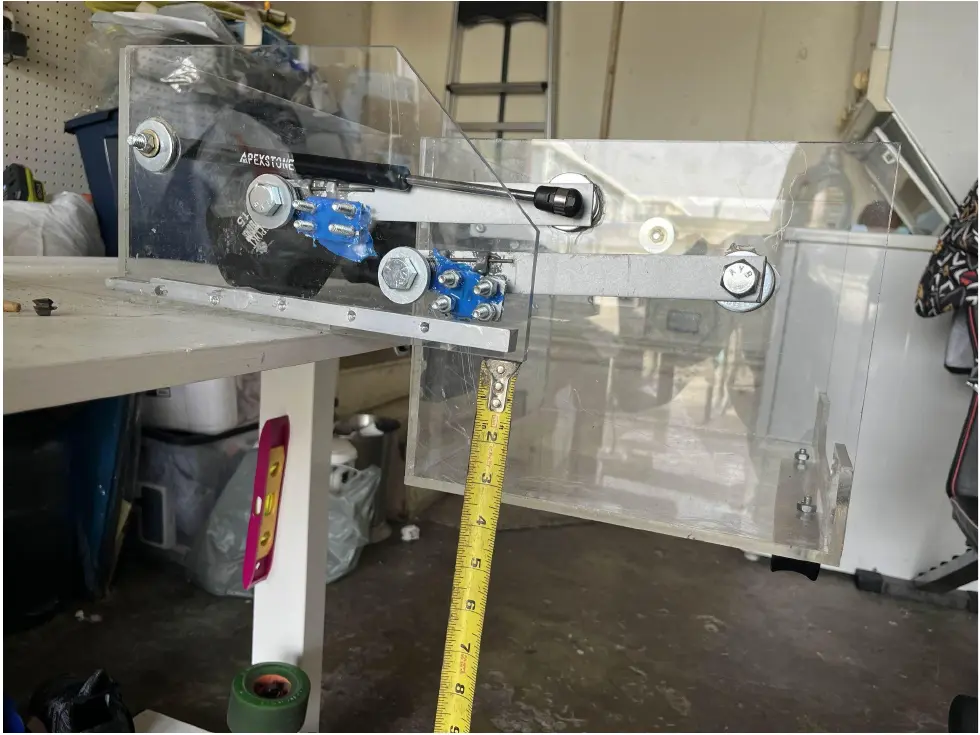
7 inAdditional accessible travel
25 lbNominal shelf load
16–18 inTarget compatible width range
5Person capstone team
01 / Project overview
Bring elevated storage into reach.
AccessiChill addresses the difficulty of reaching items stored high or deep inside a refrigerator from a seated position. Rather than redesign the appliance, the team developed an adjustable accessory that works with compatible shelf-mounting geometry.
The project progressed from user research and early mechanism concepts through SOLIDWORKS CAD, MATLAB structural analysis, engineering drawings, fabrication, assembly, testing, and final delivery.
02 / Engineering challenge + impact
The project in STAR form.
Develop a mechanically simple, scalable shelf accessory that extends before lowering, supports common refrigerator contents, and fits compatible existing enclosures.
A five-person team iterated the linkage, spring and strut layout through CAD, MATLAB FEA, drawings, fabrication, alignment work, and load testing.
The functional prototype added about 7 inches of accessible travel, operated at the 25 lb nominal load, and was delivered to a user with a relevant accessibility need.
03 / Operating principle
Extend first. Lower second.
Separating the motion into two stages moves stored items away from the refrigerator wall before the linkage brings the shelf toward a more comfortable reach height.
Retracted
Compact storage position
Extended
Shelf clears the enclosure
Lowered
Contents move toward the user
Assist lifting and retraction while countering part of the shelf moment.
Dampen the mechanism and reduce the likelihood of a sudden descent.
Define the motion path, distribute load, and help preserve shelf orientation.
Adapt the assembly across the intended range of compatible refrigerator widths.
04 / Prototype positions
Motion translated into hardware.
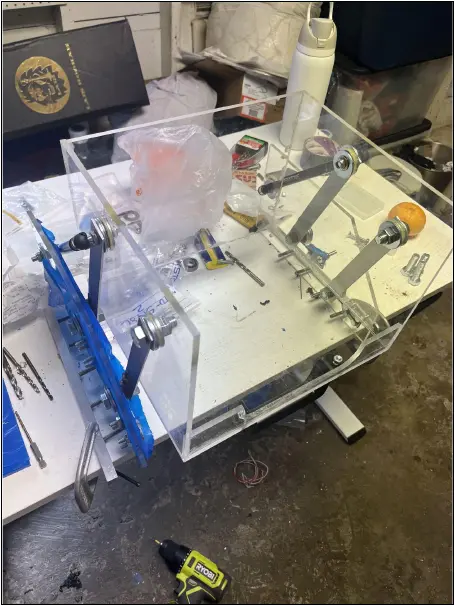
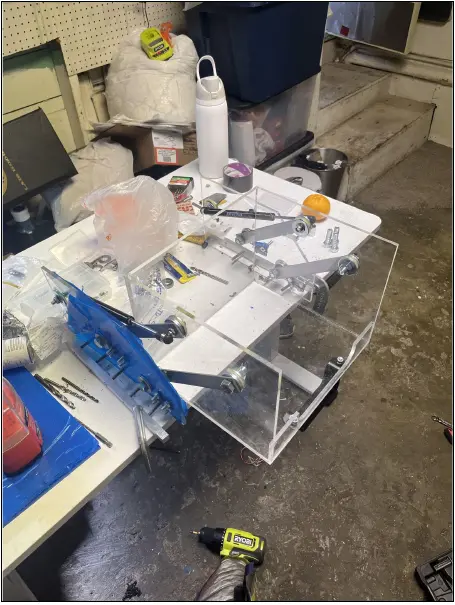
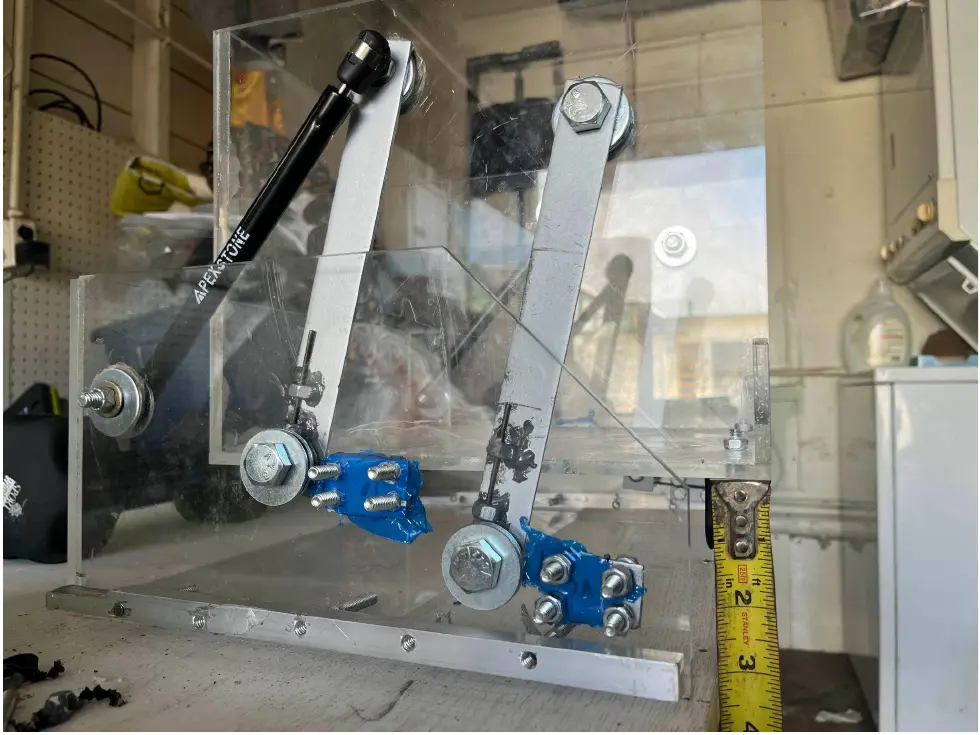
The assembled mechanism demonstrated the change from a compact storage state to the extended configuration used to improve access.
05 / Design evolution
Simplify the support path.
An important iteration relocated the gas struts from the rear structural frame to the lateral lever-arm assembly. The change placed damping closer to the moving linkage and reduced the number of struts from three to two.
Gas struts3 → 2
Lower component count, simpler assembly, and a more balanced compromise between support and manufacturing complexity.
06 / Structural analysis
Use simulation to find where the structure needs attention.
CAD geometry was exported as STL and imported into MATLAB's PDE Toolbox. Static-solid models applied material properties, fixture assumptions, and representative loads before quadratic tetrahedral meshing, displacement review, and von Mises stress evaluation.
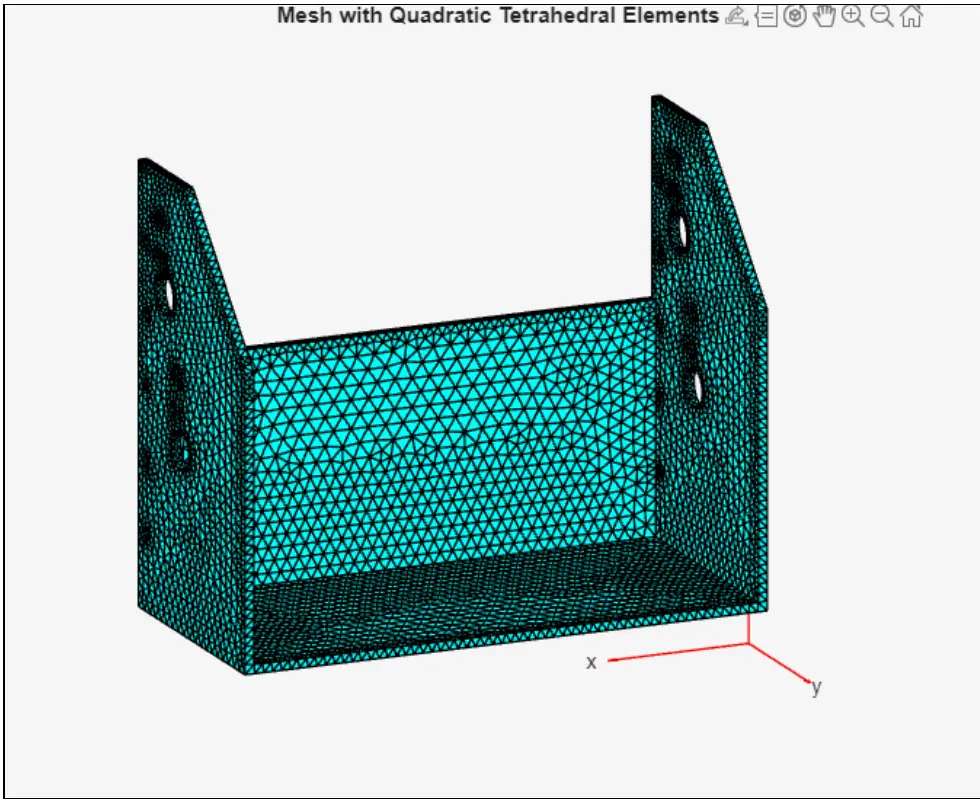
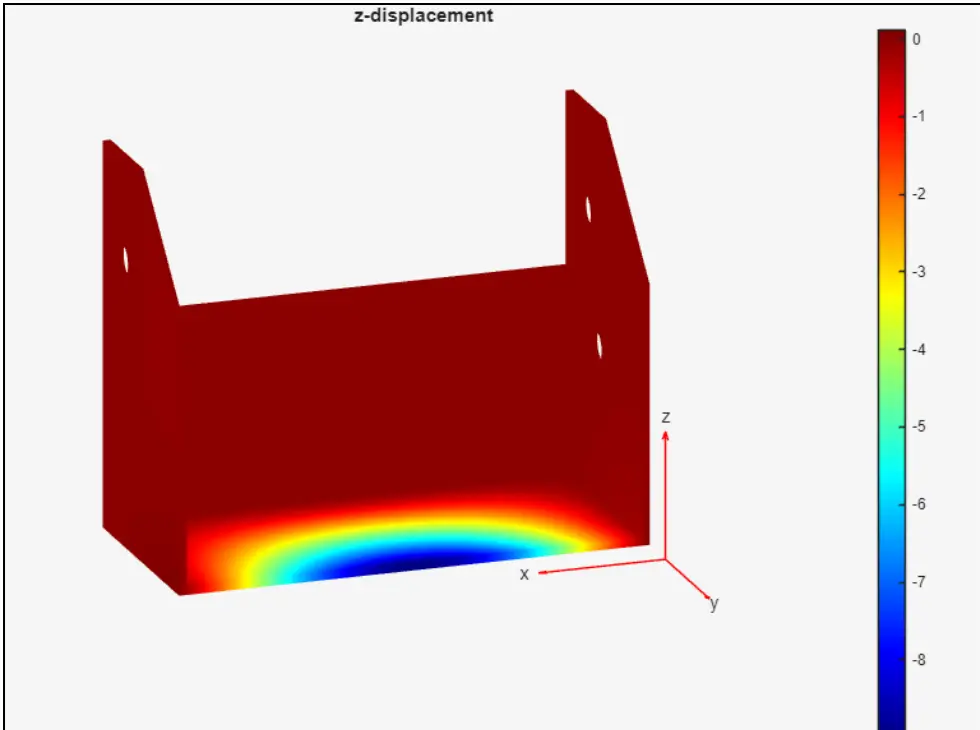
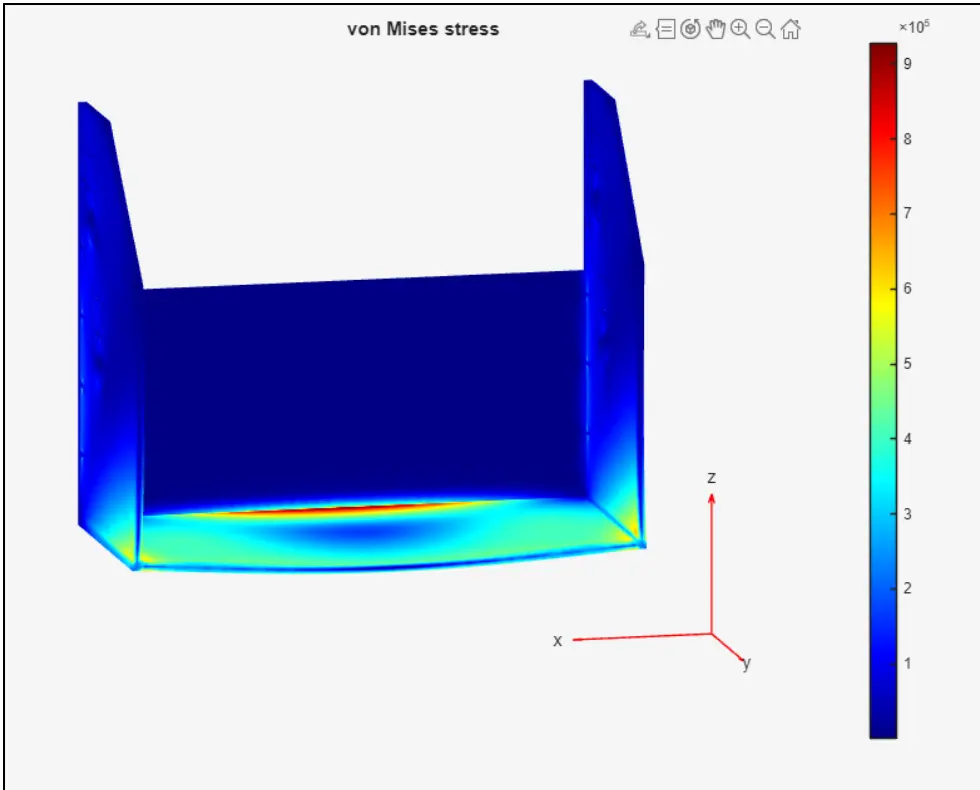
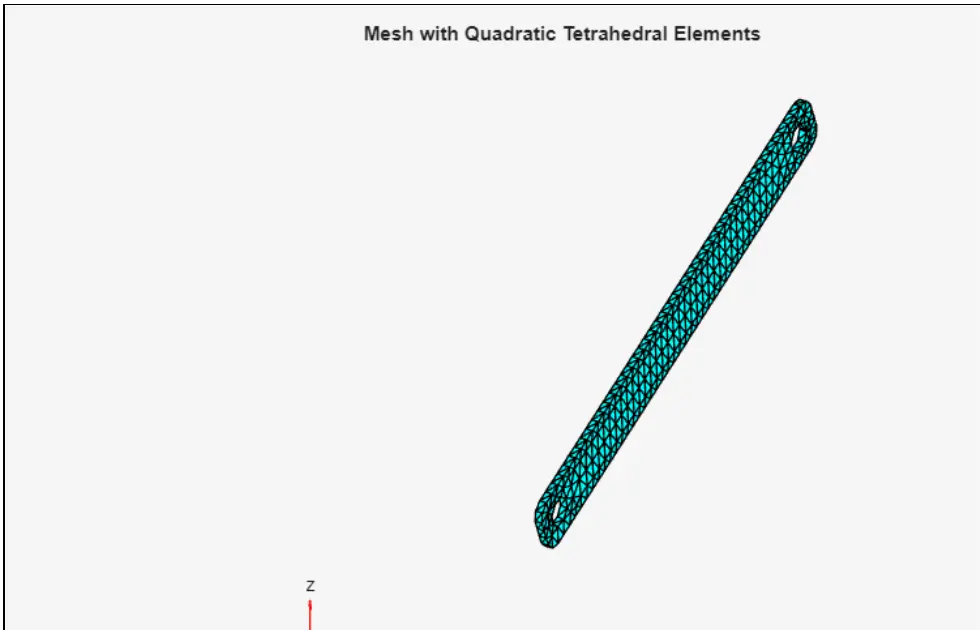
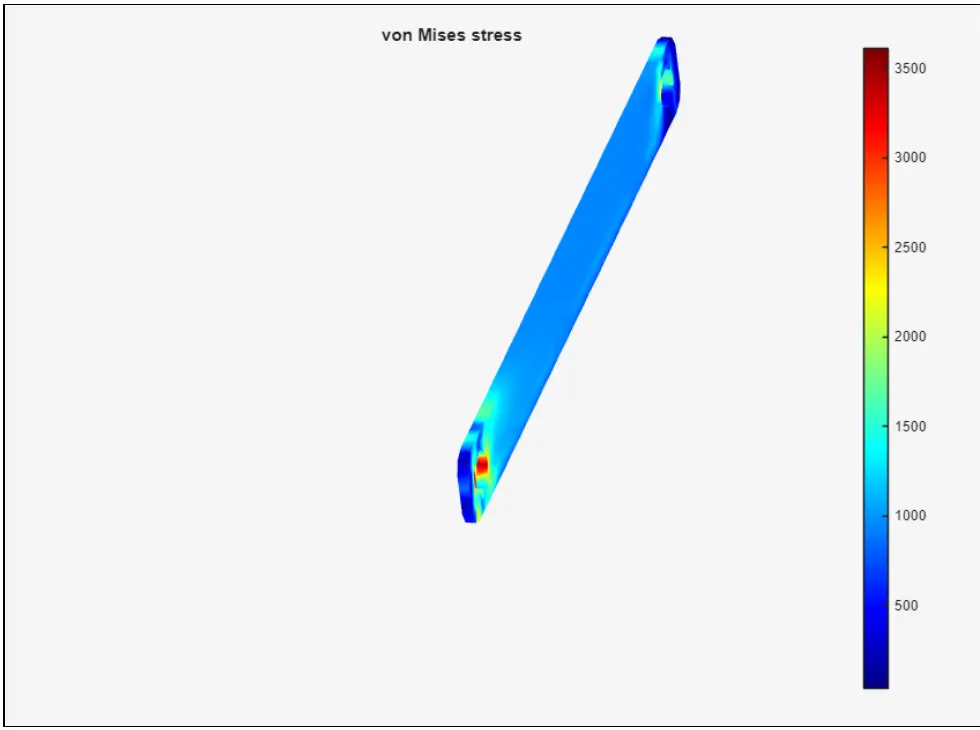
The academic report presents conflicting stress and factor-of-safety summaries. This case study therefore documents the analysis workflow and observed concentration regions without publishing a definitive FoS headline.
07 / Physical prototype + testing
The hardware exposed what the model could not.
The prototype combined an acrylic frame, steel lever arms, aluminum cross members, bearings, torsion springs, and gas struts. Fabrication and assembly required repeated adjustment of link alignment, spring placement, and strut fitment.
- Operated at the 25 lb nominal shelf load and approached 30 lb during progressive testing.
- Demonstrated repeatable extension and lowering through multiple cycles.
- Fitment trials supported the intended adjustable 16–18 inch refrigerator-width range.
- At approximately 35 lb, acrylic damage and bearing misalignment caused binding during retraction; this was a limit finding, not a validated operating capacity.
08 / Findings + takeaways
A useful prototype is also a source of evidence.
A multi-stage mechanism depends on link geometry, load distribution, stability, and motion quality—not only whether it reaches two end positions.
FEA highlighted structural behavior, while the prototype exposed tolerance, alignment, bearing, and material-damage effects that the model did not capture.
Part availability, hole position, edge quality, assembly access, and repeatability directly affected whether the mechanism moved as intended.
Useful performance is ultimately measured by safe, understandable operation and the practical reach needs of the intended user.
09 / My contribution
Mechanical Design & Structural Analysis
I contributed from initial concept development through final prototyping, leading early outreach to understand the accessibility problem and establish practical design requirements.
I developed the initial shelf mechanism and contributed to iterations focused on stability, motion quality, and functionality. I owned significant aspects of the mechanical design, structural and buckling analysis, and engineering drawings used to evaluate and communicate the design, then helped translate those requirements into a manufacturable assembly.
Collaborative engineering capstone completed by a five-person team.
10 / Future iterations
Refine motion, durability, and validation.
Future work would pair higher-quality damping struts with optimized spring selection, improve bearing mounts and alignment, reinforce highly loaded frame locations, and tighten fabrication tolerances.
Additional validation should include operating-force measurement, extended cycle and load testing, user testing, and fit studies across a broader set of refrigerator geometries. These are proposed improvements, not completed work.